1. Rynek Główny — Main Market Square
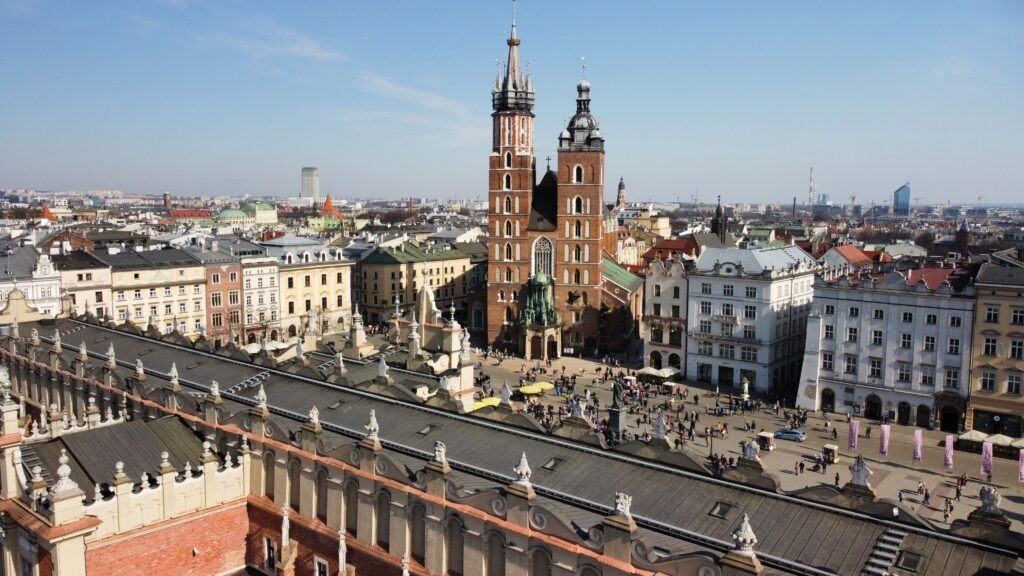
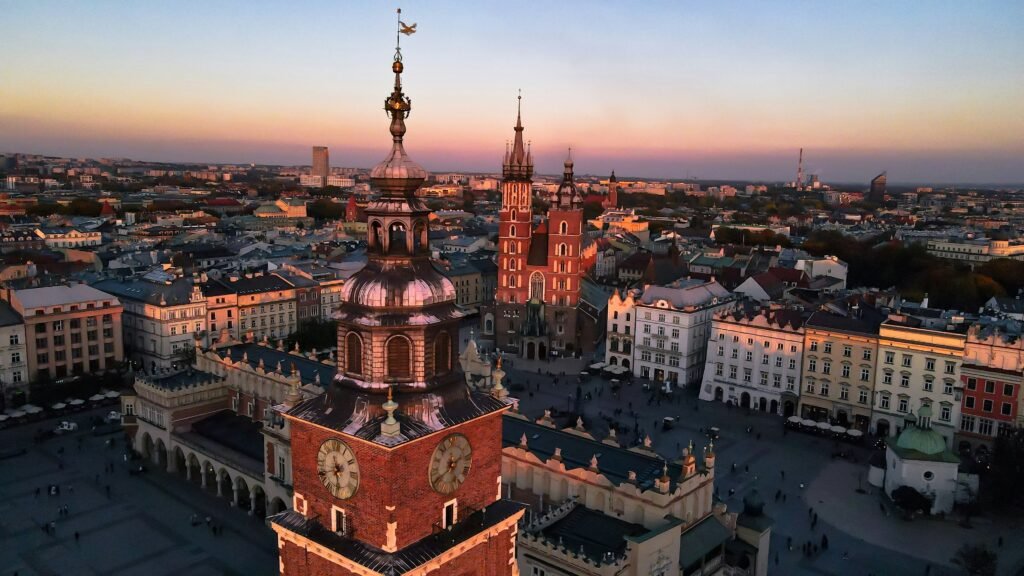
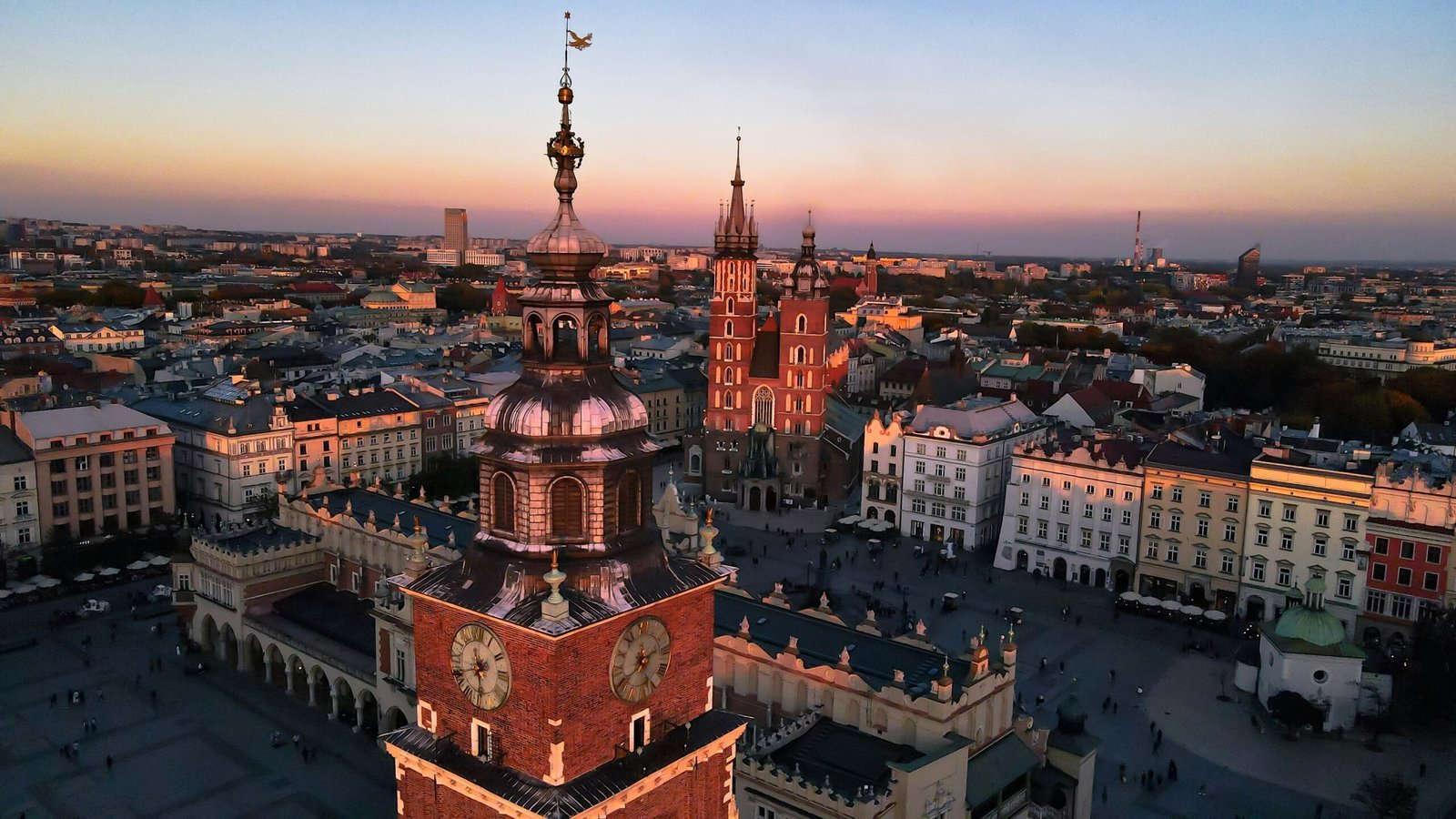
Start here. The Main Market Square has been the heart of Kraków’s social and commercial life since the 13th century — surrounded by pastel townhouses, historic churches and open-air cafés. It is the largest medieval market square in Europe, and standing in the middle of it for the first time is one of those travel moments that actually delivers. At the centre is the Cloth Hall — a 15th-century Renaissance market where merchants once traded exotic goods from the East. Today the ground floor sells local crafts and souvenirs, while the upper floor houses an exhibition of Polish fine art. On the eastern edge stands St. Mary’s Basilica. Every hour, a trumpeter plays the Hejnał Mariacki from the taller tower — a tradition that has continued since the 13th century.2. Wawel Castle and Cathedral
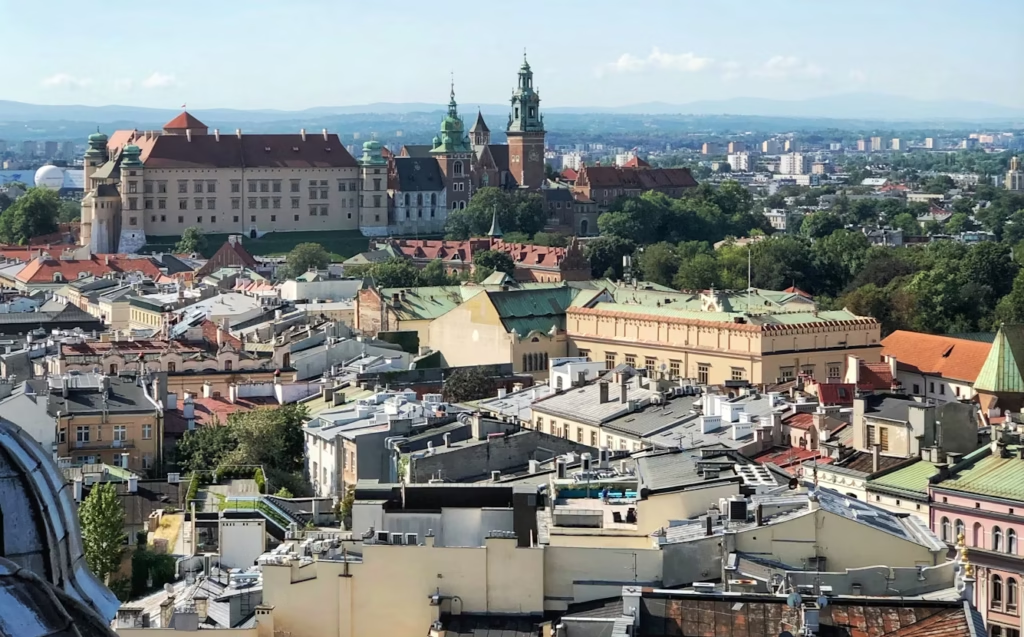
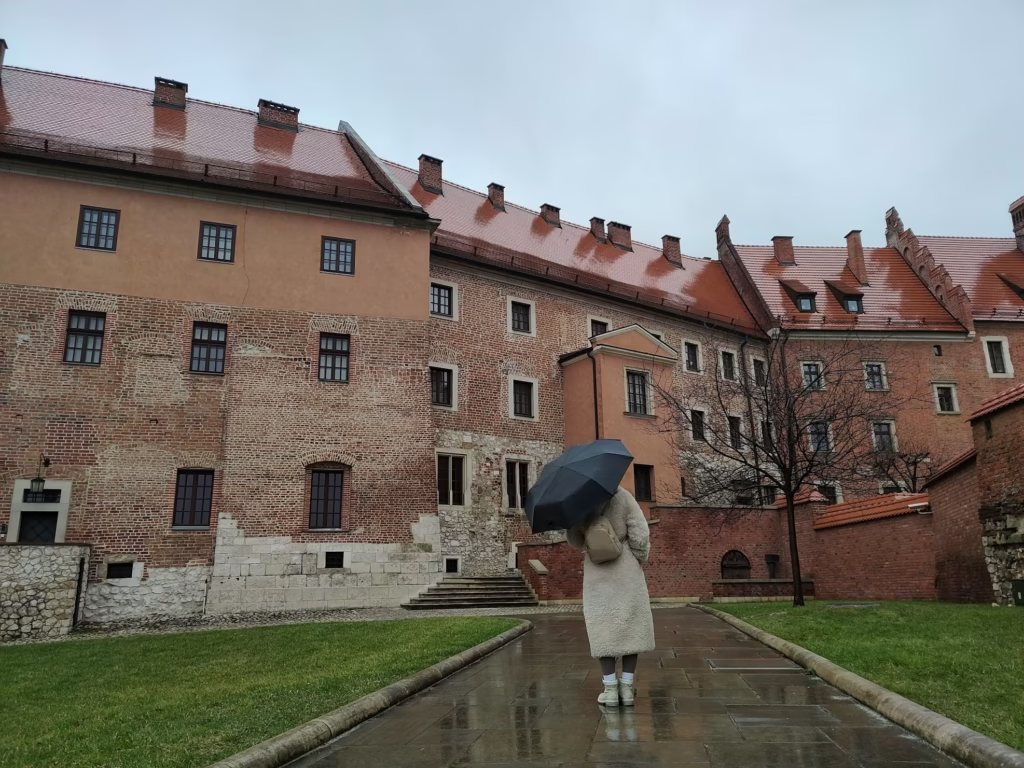
A short walk south from the Main Square, Wawel Hill rises above the Vistula river. The Wawel Royal Castle was the seat of Polish kings for five centuries — a complex of royal chambers, cathedral, treasury and dragon’s den that together tell more of Poland’s history than any museum could. The Wawel Cathedral is free to enter. The castle exhibitions require advance tickets, which sell out quickly in summer. At the foot of the hill, a bronze dragon sculpture breathes real fire every five minutes — a nod to the city’s founding legend.3. St. Mary’s Basilica
Visible from the Main Square, St. Mary’s is one of the finest Gothic churches in Poland. The interior is extraordinary — high vaulted ceilings, deep blue walls covered in gold stars, and the famous 13-metre carved altarpiece by Veit Stoss, completed in 1489. Entry requires a small ticket. Check mass times before you go, as the church closes to visitors during services.4. Kazimierz — the Jewish Quarter
A 15-minute walk south of the Old Town brings you into a completely different city. Kazimierz was the centre of Jewish life in Kraków for centuries — home to synagogues, markets and a community that numbered tens of thousands before the war. Today it’s one of the most atmospheric neighbourhoods in Poland, full of independent restaurants, bookshops, vintage shops and bars. The Old Synagogue on Szeroka Street is the oldest surviving synagogue in Poland, now a museum. The Remuh Synagogue and its 16th-century cemetery are a few steps away. Plac Nowy — the round market hall — is the best place in the city to eat zapiekanka, Kraków’s unofficial street food.5. The Jewish Ghetto — Podgórze
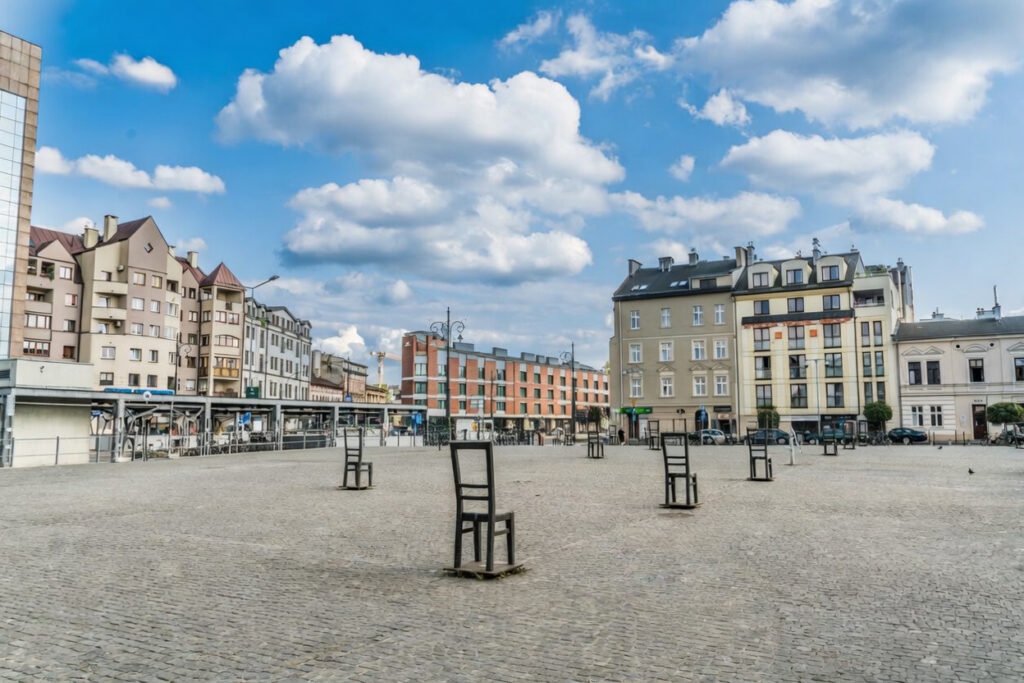
Cross the Vistula river into Podgórze and you enter the part of Kraków most people know through Schindler’s List. In 1941, the Nazi occupiers forced Kraków’s Jewish community to leave Kazimierz and relocate to a sealed ghetto across the water. Plac Bohaterów Getta — Ghetto Heroes Square — is where the deportations took place in 1942 and 1943. Thirty-three empty chairs mark those who were taken. A preserved fragment of the original Ghetto wall stands on ul. Lwowska, built deliberately in the shape of Jewish gravestones.6. Schindler’s Factory Museum
At the edge of Podgórze, on ul. Lipowa, stands the former Emalia enamelware factory where Oskar Schindler employed and protected more than 1,000 Jewish workers during the war. The museum inside covers the entire Nazi occupation of Kraków using original documents, photographs and reconstructed spaces. Book tickets well in advance and allow at least two hours.7. Florian Gate and the Barbican
At the northern edge of the Old Town, the Florian Gate marks the start of the Royal Route — the ceremonial road along which Polish kings once entered the city. Just beyond it stands the Barbican, the only remaining gatehouse from the medieval fortifications that once encircled all of Kraków. You can walk through the gate for free or pay a small fee to explore the walls.8. Planty Park
Planty Park forms a green ring around the entire historic Old Town — laid out in the early 19th century on the site of the city’s demolished medieval walls. Pathways wind past fountains, sculptures and old brick towers. It’s the most pleasant way to move between Old Town sights without using a main road.9. Wieliczka Salt Mine
About 14 kilometres southeast of the city centre, the Wieliczka Salt Mine has been in continuous operation since the 13th century and is a UNESCO World Heritage Site. The guided tour covers around 3 kilometres underground through tunnels, chambers and chapels carved entirely from salt — including the extraordinary St. Kinga’s Chapel. The tour takes around two hours. Book online in advance.10. Auschwitz-Birkenau
Around 70 kilometres west of Kraków, the Auschwitz-Birkenau concentration and extermination camp is one of the most significant historical sites in the world. A guided tour covers both Auschwitz I and Auschwitz II-Birkenau and typically takes three to four hours. Book well in advance — many visitors reserve their place three months ahead. This is not a comfortable visit. It is a necessary one.Frequently Asked Questions
Most first-time visitors need at least two to three days to cover the Old Town, Kazimierz and the Ghetto comfortably. Add a fourth day if you plan to visit Auschwitz or Wieliczka Salt Mine — both are half-day trips from the city centre.
The historic centre is compact and walkable. The Old Town, Kazimierz and Podgórze are all within a 30-minute walk of each other. The cobblestones can be hard on your feet over a full day — comfortable shoes are essential.
Spring (April to June) and autumn (September to October) offer mild weather and fewer crowds. Summer is the busiest season. Winter is cold but atmospheric — the Christmas market on the Main Square is one of the best in Central Europe.
Yes — Kraków is considered one of the safer cities in Central Europe. Standard precautions apply in busy tourist areas, particularly around the Main Square in the evening.
For Schindler’s Factory Museum, Wawel Castle and Auschwitz: yes, book in advance. For most churches, the Main Market Square and Planty Park: no booking required.
The local currency is the Polish złoty (PLN). Credit cards are widely accepted, but carry some cash for market stalls and smaller establishments.
Yes — with three full days and a reasonable pace. Auschwitz and Wieliczka each require a dedicated half-day. The remaining eight sites can be covered in two days, especially if you use an electric golf cart tour to cover Kazimierz and the Ghetto efficiently.